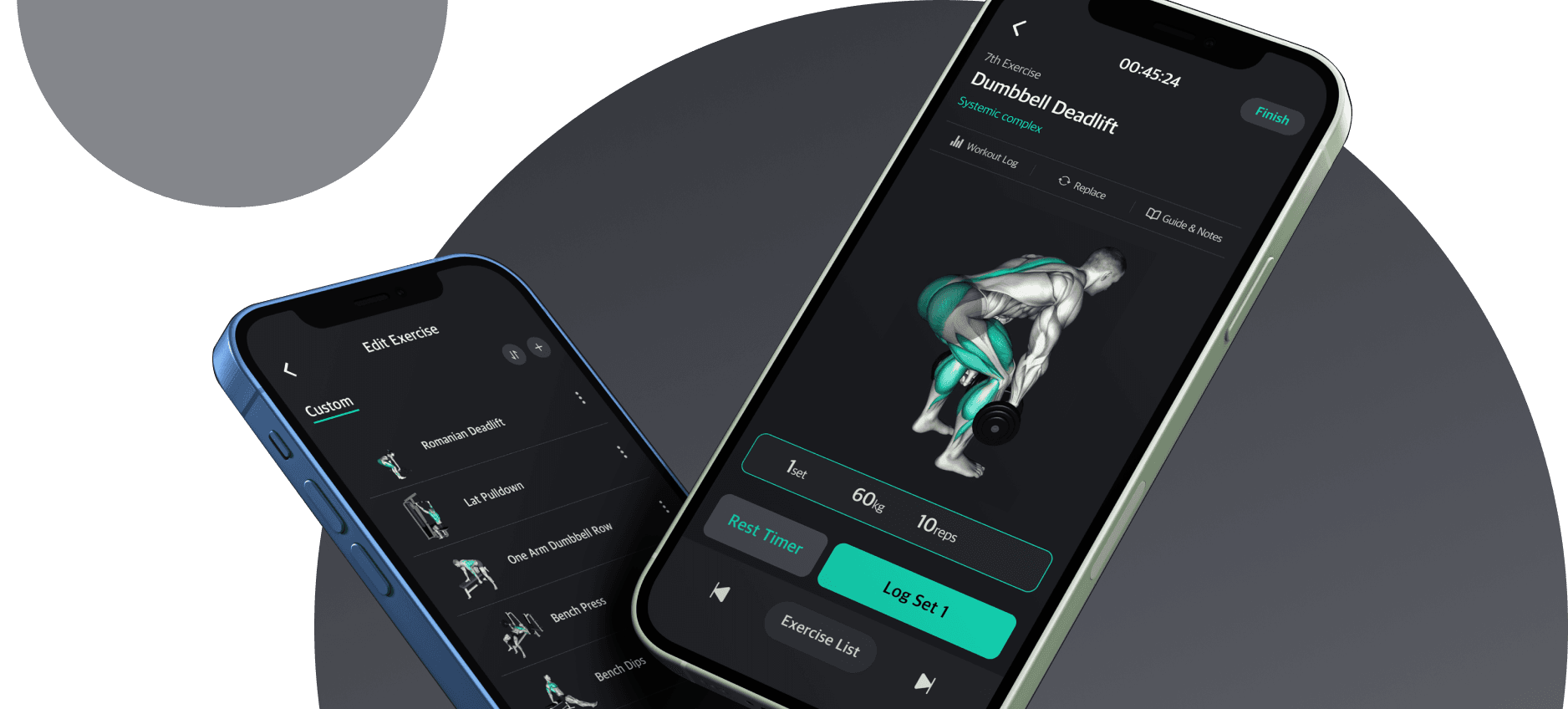
Bench Press
Overall chestAbout
This is one of the most common chest workouts. Even if you only do bench presses for your pecs, it may suffice.
How to Bench Press
Starting Position
1. Lie on the bench and fix your feet to the floor.
2. Pull your shoulders back and hold them in place so that your shoulders are positioned behind your chest.
3. Keep your lower back in a natural arch.
4. Grip the barbell with both hands slightly wider than shoulder-width.
5. While keeping your lower back and shoulders fixed, lift the barbell to position it above your chest.
Proper Form
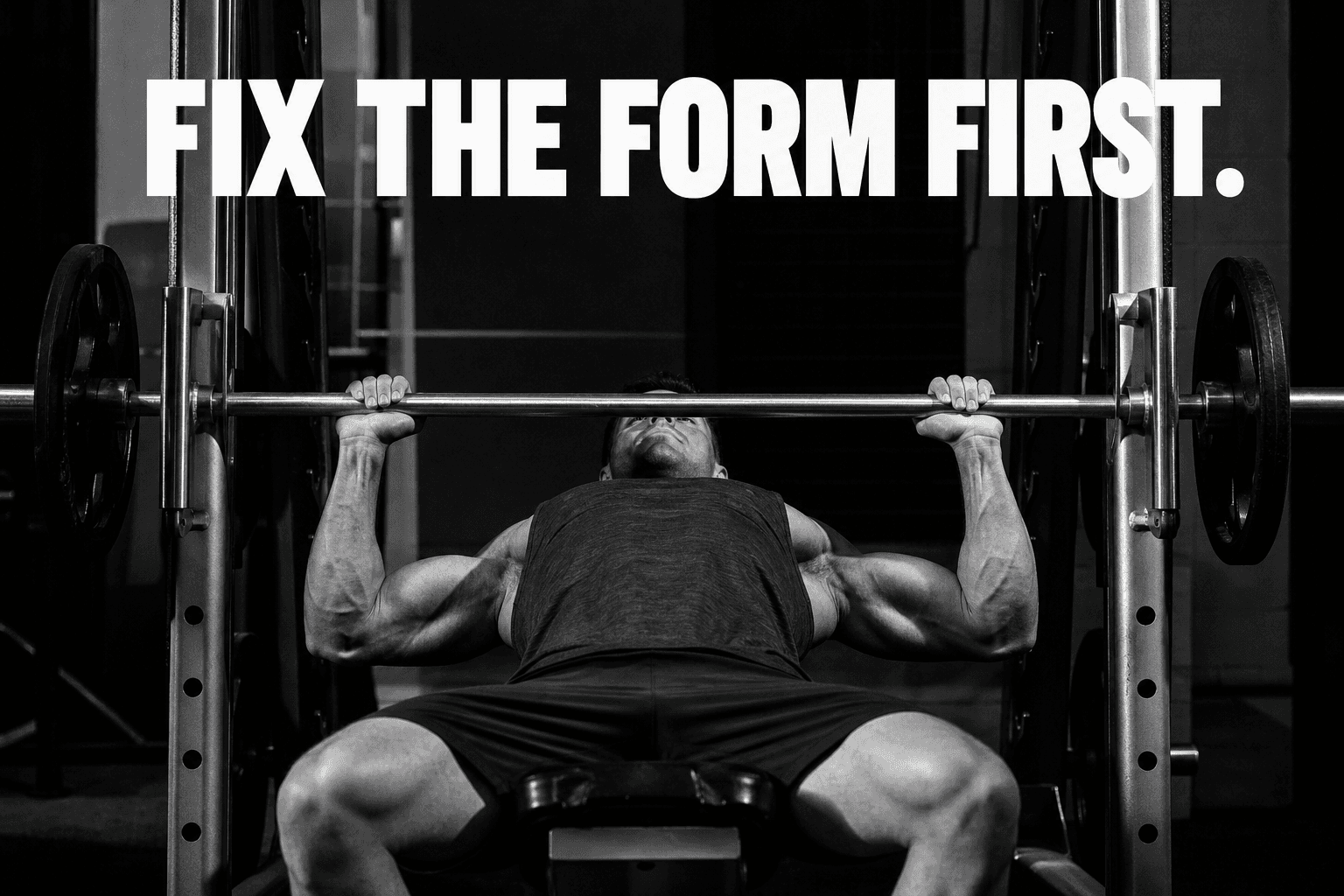
1. Slowly lower the barbell until it touches below your chest.
2. At this time, your forearms should be perpendicular to the floor.
3. Slowly lift the barbell back to the starting position.
Breathing Technique
Inhale when you bend your arms, and exhale when you push your arms.
Muscles Bench Press Works
Muscles used
- Pecslarge chest muscles covering the front of the chest
- Tricepsback of the upper arms
- Front deltsfront of the shoulders
- Serratus anteriorsaw-shaped muscle along the side of the ribs under the armpit
- Rectus abdominisThe six-pack muscles running from your chest to your pelvis
Main muscleLie on the bench and press the bar up from your chest as your elbows extend. The main muscle driving this movement is your pecs. Your pecs bring your upper arms toward the front of your body and help press the bar upward.
Supporting musclesYour triceps help straighten your elbows, your front delts assist the press, and your serratus helps keep your shoulder blades stable so force can transfer through your chest.
How it should feelAs you lower the bar, your chest should open and stretch. As you press up, your chest should squeeze inward and feel firm. Your triceps should finish the lockout as a helper, not as the main driver.
Signs you're offIf only the front of your shoulders ache or your elbows flare too wide, you are probably pressing more with your shoulders than your chest. If your shoulder blades lift off the bench, chest tension drops and shoulder stress increases.
Remember thisPin your shoulder blades to the bench and press the bar up with your chest.
Setting Up for Bench Press
Setup orderPosition the bench under the bar → Set rack height and safety bars → Add matching plates → Lock the clips
Bench position
Set it like thisPlace the bench under the bar so the bar is directly above your eyes when you lie down.
How to checkWhen you look up, the bar should appear just above your eyes, not behind your head or over your chest.
Rack height and safety bars
Set it like thisSet the rack so you can unrack the bar with your arms almost straight. Set the safety bars so the bar will not press into your chest.
How to checkYour shoulders should stay on the bench when you unrack, and the bar should rest slightly below chest level if placed on the safety bars.
Plates and clips
Set it like thisSlide matching plates all the way onto both sides, then lock the clips right next to the plates.
How to checkBoth sides should have the same weight, with no visible gap between each clip and plate.
Watch out forAvoid placing the bar too far behind your eyes or over your chest, skipping the safety bars, or leaving plates partially loaded.
Stance for Bench Press
Foot widthLie on the bench and place both feet comfortably on the floor.
Where your weight goesKeep your hips and upper back on the bench, and keep both feet firmly on the floor.
Upper body positionPosition your body so the bar is above your eye line when you lie down.
Why it mattersIf your body shifts, it becomes harder to lower and press the bar steadily, and your shoulders or lower back may feel more stress.
How to Grip for Bench Press
Grip typePlace the barbell on the thick lower part of your palm near your wrist, and wrap your thumbs around it.
Grip widthPlace your hands slightly wider than shoulder width, about half a palm wider on each side, holding the same position on both sides of the bar.
How hard to gripKeep the bar on the thick lower part of your palm near your wrist, and keep the backs of your hands in line with your forearms.
The Key Point for Bench Press
When lowering the bar, make sure your shoulders don't roll forward, and lower your elbows diagonally to the sides of your torso.
Think of it like thisThe feeling of lowering your elbows slightly below your shoulders.
Before the fixWhen lowering the bar, my shoulders roll forward, and the front of my shoulders feels uncomfortable first.
After the fixMy shoulders feel stable, and the bar comes down comfortably toward my chest.
Common Mistakes in Bench Press
Hips lift off the bench
Why it's wrongIf your hips lift, your back may overarch, and you might rely on your lower back and shoulders instead of your chest.
How to fix itKeep your hips down and press your feet into the floor.
Bouncing the bar off the chest
Why it's wrongIf you bounce the bar, your chest works less and your shoulders take the strain.
How to fix itPause lightly on the chest, then press up.
Elbows flare too wide
Why it's wrongIf your elbows flare out too much, you might feel strain or pain in your shoulders.
How to fix itKeep your elbows slightly below your torso, and align your wrists directly above your elbows.
Precautions
1. If the barbell does not touch your chest, please lower it as much as possible without overexerting yourself.
2. Be careful not to let your shoulders come forward of your chest, as this can put strain on your shoulders.
3. Please be careful not to let your hips come off the bench.
From the Community
For real... I'm flipping out... If there's no one to help, just enough!
View full discussion →just extending on this - you don’t want to use your momentum, you want to completely reset it if that makes sense
View full discussion →💪 awesome 😎
View full discussion →...? I used two 20 kg plates, but...? Hahahaha 60 kg, huh?
View full discussion →Personally, when I held the bar wide, I felt a lot of strength in the outer chest muscles, and when I held it narrow, I felt the strength evenly distributed. I tried doing 20 reps with an empty bar to get a feel for it before moving on.
View full discussion →
Bench Press Community
Join the Community →

Browse by muscle group or equipment
Bench Press Alternatives


Bench Press vs