Calisthenics Workout Plan: 4-Day Bodyweight (Intermediate)
5 min read
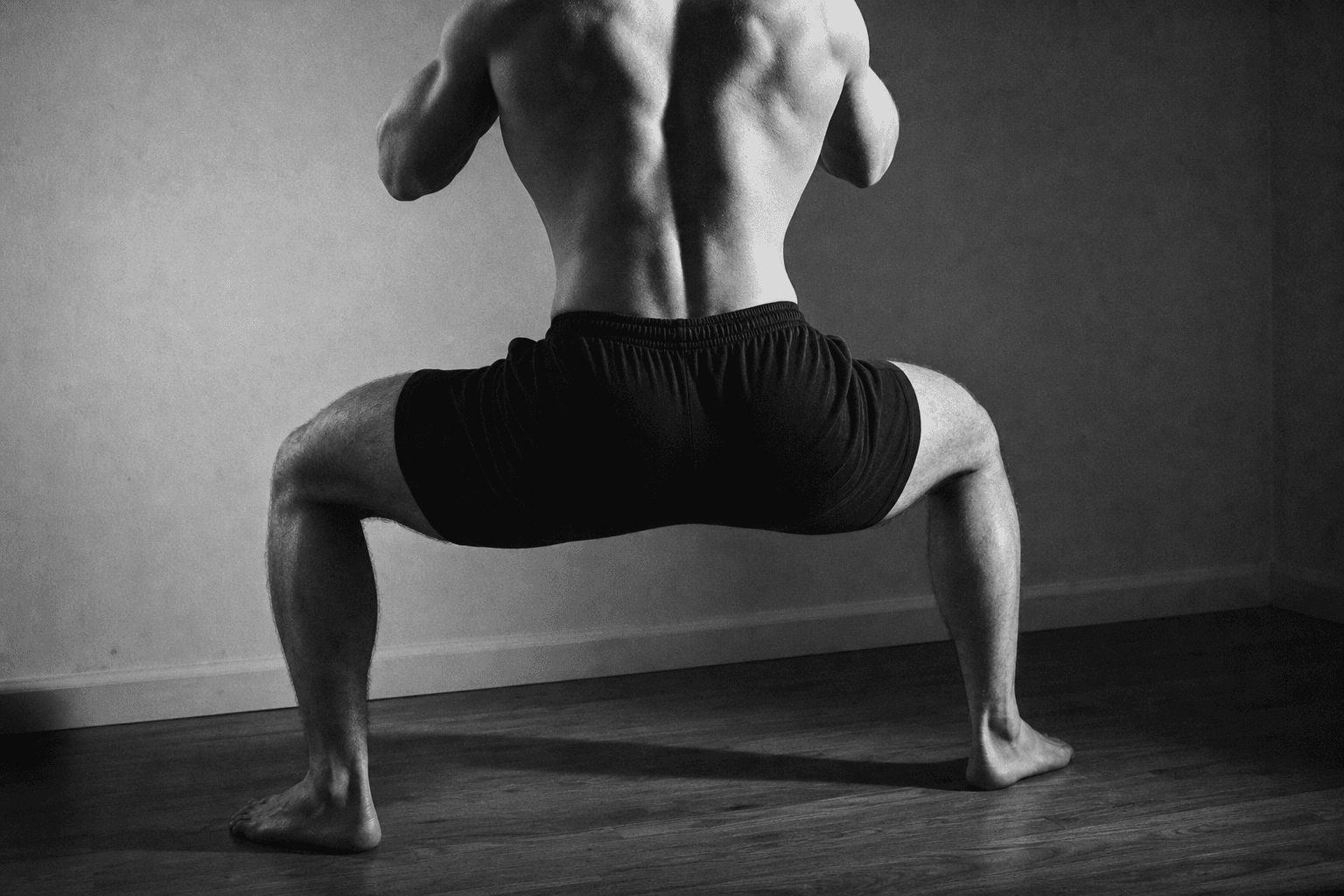
A 4-day bodyweight plan that fits around your own bar
If you want a calisthenics plan that trains you 4 days a week without a single machine, this is it. It splits into upper body, lower body, push, and pull days, so each session has a clear job and your muscles get real recovery between hits.
All you need is your bodyweight and a pull-up bar for two of the days. Everything else works on a floor and a wall. This suits someone who already trains, not a first-week beginner — you should be comfortable holding a plank and doing a handful of strict push-ups before you start.
Day 1 · Upper body
This day trains your whole upper body in one sweep — pressing, pulling, and shoulder work back to back. The Neutral Grip Chin Up is the hardest lift here, so do it early while you're fresh. On the Reverse Push Up, keep the movement slow and controlled rather than rushing to hit reps.
Day 2 · Lower body
Legs and core share the day because your hips and midline work together on almost every lower-body move. Push the Squat and Wide Squat for depth, not speed — a shorter range with strict form beats a bounce at the bottom. Save something in the tank on the Bicycle Crunch so your lower back doesn't take over.
Day 3 · Push
This is a pure pressing day — chest, shoulders, and triceps get hit from several angles. The Diamond Push Up is the toughest of the five, so if your elbows start flaring out badly, drop to a wider hand position for that set instead of grinding out bad reps. Chair Dips need a stable, non-wobbling chair.
Day 4 · Pull
Pull day balances out everything you pressed on push day — back, biceps, and rear chain. The Pull Up and Chin up both load your back hard, so pace your grip: if your hands give out first, that's normal, rest the full interval and finish the reps you can. Lying Back Extension should stay slow and controlled, not snapped up fast.
How to progress week to week
Add reps before you add difficulty. Once you can hit the top of the rep range on every set of an exercise with good form, that's your signal to move on — not before. For push and pull movements, the next step up is usually a harder variation of the same pattern (a slower tempo, a longer pause at the bottom) rather than a new exercise, since the table is fixed.
A sign you're moving too fast: your form breaks down in the last few reps of every set, or you're sore for more than 2-3 days after a session. If that happens, repeat the same week's loading again rather than pushing further. Progress here is steady, not dramatic — a few more clean reps every week or two is a good pace.
How to adjust it
No pull-up bar? Swap the pulling exercises for a bodyweight row done under a sturdy table, or a slow negative from a raised position if you have nothing to hang from — go as low and controlled as you can manage.
Fewer than 4 days available? Keep push and pull, since they cover the most muscle in the least time, and fold in the upper or lower day when you have a fifth session.
Missed a session? Don't double up the next day. Just pick up where the week left off and let the missed day roll into next week.
An exercise feels wrong for your joints? Drop the range of motion first — a smaller, pain-free range still trains the muscle — before you consider it not for you.
Mistakes that stall this plan
- Skipping the rest between sets. Bodyweight work still needs 60-90 seconds to recover — rushing it just means fewer clean reps later in the set.
- Turning every set into a grind. If your last 2-3 reps look nothing like your first, the set was too hard for today — ease off, don't force it.
- Doing push and pull days back to back with no gap. Give your upper body at least a day of separation so the same muscles aren't hit twice in a row.
- Chasing more reps instead of harder form. Once 12 reps gets easy, slow the tempo down before you just pile on more reps — control is what keeps this plan working long-term.
FAQ
Do I need any equipment at all? Just a pull-up bar for two exercises on Day 1 and Day 4. Everything else uses only the floor, a wall, or a chair.
What if I can't finish all 3 sets of an exercise? Do what you can with good form and stop there. Next session, try to add one more rep before you add a full extra set.
Can I do this plan on consecutive days? You can, but push and pull shouldn't sit back to back since they load overlapping upper-body muscle. Space them with the lower-body or rest day between.
Is this plan enough to build muscle with no weights? Bodyweight training builds real muscle as long as the effort stays close to failure and you keep adding difficulty over time — the mechanism is the same as lifting, just with your own bodyweight as the load.
Get a plan built around you, not just your bar
This 4-day split is a solid general template to start from. Planfit generates a routine around your specific goal, experience level, and available equipment, and suggests intensity and warmup sets for each exercise so you're not guessing at effort on your own.