5-Day Workout Plan for the Gym (Intermediate)
5 min read
Your 5-Day Workout Plan for the Gym
This is a 5-day gym split built for someone at an intermediate level: push, pull, legs, then two more days that split upper and lower body again for extra volume. Every exercise below uses standard gym equipment—dumbbells, barbells, cables, and machines—plus a few bodyweight moves mixed in.
The split works because each day trains a different set of muscles hard, then leaves them alone for several days to recover while another muscle group takes the load. You're in the gym 5 days, and the table below has the exact sets, reps, and rest for every exercise—no guessing what to do when you get there.
Day 1 · Push
Day 1 groups everything that presses weight away from your body—chest, shoulders, triceps—so those muscles get hit hard together and rest together before you push again. Save your heaviest effort for the dumbbell bench press, when you're freshest. If a bench press feels off that day, the wide push up in the same session covers the same movement pattern with your own bodyweight.
Day 2 · Pull
Pulling muscles—back, biceps—sit next to the romanian deadlift here because pulling a bar off the floor and rowing it toward you both load the same posterior chain. Keep your lower back flat through the deadlift; stop the set the moment it rounds, even if that means fewer reps than listed. Let your grip fatigue on the curls, not on the first pulling movement of the day.
Day 3 · Legs
Legs day pairs the squat pattern with the hip-hinge of the stiff leg deadlift, and drops in core work between the two so your legs get a breather without the session stalling. Treat the first squat as your warm-up and save your heaviest weight for the barbell squat later in the session. On the ab work, move slow and controlled rather than fast and short.
Day 4 · Upper body
This day revisits chest, back, and arms with a different mix than push day—more bodyweight pressing, less machine work. The diamond push up narrows your hand position, so it hits triceps harder than a standard push up; if it's too much on your wrists, slow down the way down instead of stopping short. Let the EZ-bar curl be where you chase the last hard rep.
Day 5 · Lower body
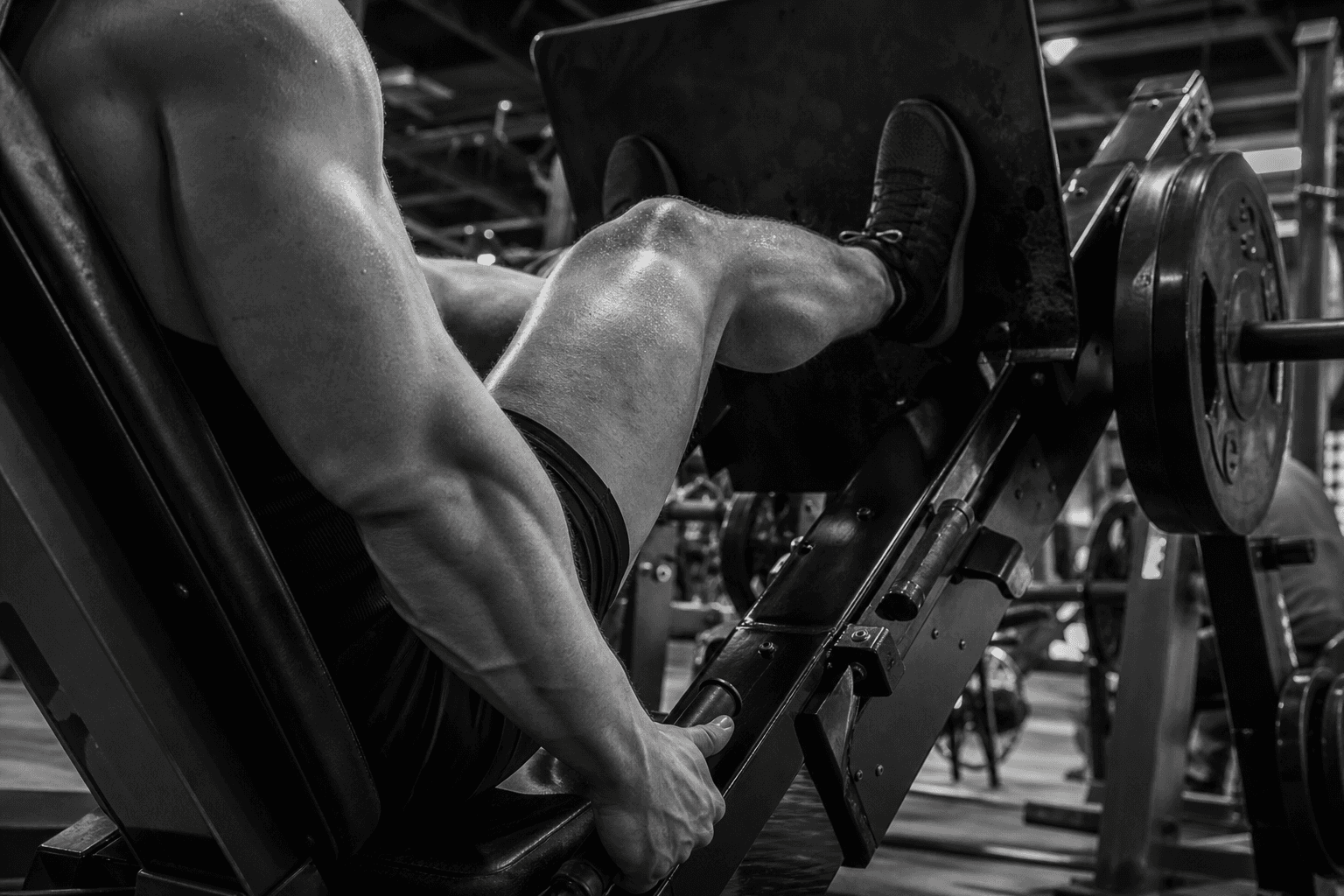
The week closes on legs again, but from angles day 3 didn't cover—single-leg work with the dumbbell lunge, then a machine-based push with the leg press, plus more core. Keep your front knee tracking over your foot on the lunge rather than caving in. On the leg press, don't lock your knees out hard at the top; stop just short and reverse.
How to progress week to week
Once you can complete every set of an exercise at the top of its rep range with good form, that's your cue to add weight next session—a jump of about 5-10% is plenty. Don't add weight and reps in the same week; pick one. If you're still missing reps at the bottom of the range after two or three sessions, the weight is too heavy—drop it back rather than grinding through sloppy sets.
Too fast looks like this: your form breaks down on the last rep of every set, or the next day's workout feels flat instead of just tired. When that happens, back off the added weight for one session and let your joints catch up. Slow, steady increases beat a fast climb that stalls out.
How to adjust it
Missing a day? Pick up on the next day in order rather than skipping straight to the next push or pull day—don't cram two sessions into one. If you can only train 3-4 days a week, keep the push, pull, and legs days and drop one of the two body-part days first; they're the extra volume, not the foundation.
No equipment for something? Match the movement, not the machine. A shoulder press machine trades for a standing press with dumbbells or a barbell; a lat pulldown trades for a pulling motion done bodyweight, like a row from a low bar. If an exercise bothers a joint, swap it for another move in the same day that trains the same muscle without the same pain.
Mistakes that stall this plan
- Chasing weight over form. Adding load before you own the rep range just teaches bad patterns at heavier weights. Add reps first, weight second.
- Skipping the rest windows. Cutting rest short to save time undercuts the next set—you'll grind out fewer clean reps. Use the full rest window listed, especially on the heavier lifts.
- Training through joint pain. Soreness in a muscle is normal; sharp pain in a joint is not. Swap the exercise for one that doesn't provoke it instead of pushing through.
- Restarting the whole plan every time you miss a week. One missed week doesn't erase progress. Pick up where you left off and keep the weights you were already using.
FAQ
What if I can't finish all 3 sets?
Do as many clean reps as you can on that last set and move on. Write down what you actually completed so next session you know whether to repeat the weight or drop it.
Can I do this plan on fewer than 5 days?
Yes—see the adjustment section above. Keep push, pull, and legs first; the upper body and lower body days are the first to cut if your week is tight.
Is 8-12 reps the right range for building muscle?
It's a solid general range for someone at an intermediate level in the gym—heavy enough to challenge you, light enough to keep your form clean across all sets.
How long should I rest between exercises, not just sets?
The rest listed (60-90 sec) is between sets of the same exercise. Once you move to the next exercise, you're already changing muscles, so you don't need extra rest before starting it.
Want a plan built around your own gym?
This 5-day split is a solid general template for an intermediate lifter with full gym access. Planfit builds a routine around your specific goal, experience level, and available equipment, and suggests intensity and warm-up sets for each exercise as you go.