7-Day Gym Workout Plan for Intermediate Lifters
5 min read
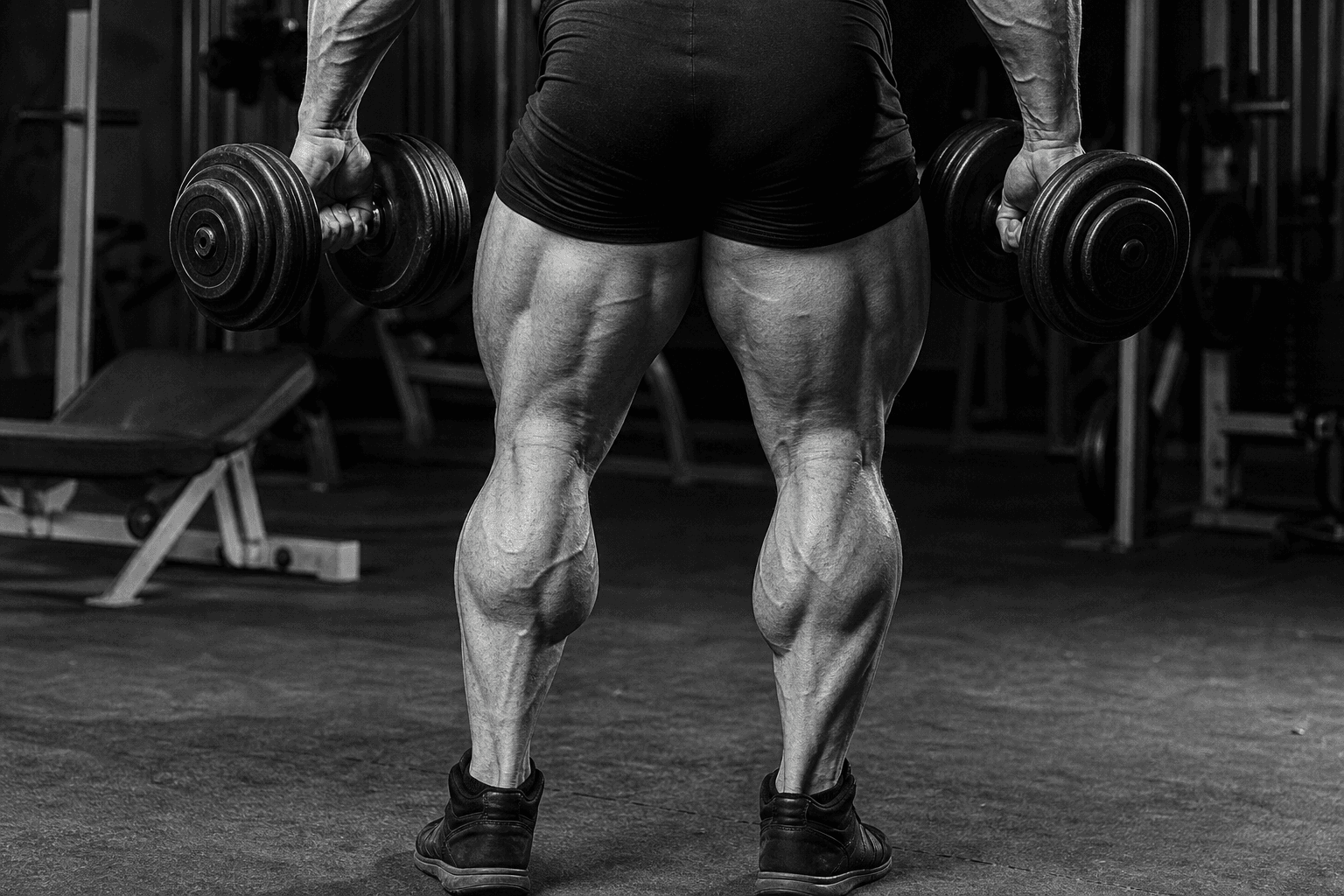
A 7-day gym split built around push, pull, and legs
This is a 7-day gym plan for intermediate lifters: five training days split into push, pull, legs, upper body, and lower body, with two rest days worked in so you're never stacking hard sessions back to back. Every exercise below uses gym equipment — machines, dumbbells, barbells, and cables — so you'll want a full gym for the week, not a home setup.
The split groups muscles that work well together rather than hitting everything at once, so you can push harder on each session and still recover before the next one hits the same muscles.
Day 1 · Push
Push day trains chest, shoulders, and triceps together since they all drive pressing movements. Diamond Push Up and Hindu Push Up warm the same muscles from different angles before you load them with the tricep extension and dips. Push the last rep of each set close to your limit — these are the exercises where you can afford to grind.
Day 2 · Pull
Pull day pairs your back and biceps, the two muscle groups that do the work every time you row or curl. Start with Twist Superman to wake up the lower back and core before you load the spine on Barbell Row. On the curls, keep your elbows pinned to your sides so your back doesn't take over the lift.
Day 3 · Rest day
Rest day. No workout today — this is where the muscle you trained on push and pull actually rebuilds. Keep moving with a walk or light stretching, eat enough protein to support repair, and get a full night's sleep. Skip this and Thursday's leg session will feel flat before it even starts.
Day 4 · Legs
Leg day mixes hip-hinge work with quad-dominant moves and core, so hamstrings, glutes, quads, and abs all get covered in one session. Hinge from the hips on the Barbell Stiff Leg Deadlift and keep the bar close to your legs the whole way down. Save your heaviest effort for Leg Press, where the machine has your back.
Day 5 · Upper body
This upper body day is broader than push or pull alone — chest, shoulders, arms, and a full-body pull on Deadlift. Treat the deadlift as the priority lift of the day and do it while you're freshest. On Bench Dips, stop the descent before your shoulders round forward.
Day 6 · Rest day
Rest day. Your upper body took a real hit yesterday between the deadlift and the pressing work, so let it recover. Light walking, mobility work, and solid sleep do more for tomorrow's leg session than anything you could add in the gym today.
Day 7 · Lower body
Lower body day closes the week with squat variations and core work. Squat and Wide Squat train the same movement pattern with different foot positions, so use the wide stance to feel more through the glutes and inner thighs. On Barbell Squat, go only as deep as you can keep your heels flat on the floor.
How do you progress week to week?
Add reps before you add weight. Once you can complete every set at the top of the rep range listed for an exercise, that's your signal to increase the load next time you train it — not before.
When you do add weight, keep it small: enough that the bottom of the rep range feels hard again, not so much that your form breaks down. A jump of 5-10% in load is plenty for most exercises.
Too fast looks like this: you add weight two sessions in a row, or your reps drop below the listed range the week after a jump. If that happens, drop back to the load you handled cleanly and rebuild reps from there before pushing again.
How do I adjust it if something doesn't fit?
Missing equipment. If a machine is taken or you don't have access to one listed, swap in the closest movement pattern you do have — for the Chest Press Machine, a press from the floor covers the same muscles; for the Preacher Curl Machine, a curl braced against an incline bench works the same way.
Fewer training days. If 7 days isn't realistic, drop one of the two rest days' worth of intensity by combining Push and Pull into a single session rather than skipping a muscle group entirely.
Missed a session. Pick up where you left off rather than doubling up the next day — don't try to fit two sessions into one.
Swapping an exercise. Stay within the same muscle group and rep range so the rest of the week's balance holds.
Mistakes that stall this plan
- Skipping both rest days. The plan works because of the recovery, not despite it. Train through both rest days and your lifts on push and legs start sliding backward, not forward.
- Adding weight before reps catch up. Jumping load while you're still missing reps at the bottom of the range just grinds out ugly sets. Fix: hit the top of the rep range first.
- Racing the rest interval. Cutting 60-90 sec rest short leaves you weaker for the next set, which shows up as fewer reps all session. Fix: use the full window, especially on heavier lifts like Deadlift and Barbell Squat.
- Copying weight across exercises. The same load doesn't belong on Dumbbell Shoulder Press and Dumbbell Bicep Curl. Fix: let each exercise earn its own working weight.
FAQ
Can I do this plan with fewer than 7 days a week?
Yes. The two rest days are already built in, so if you need a third day off, take it after Day 5 or Day 7 rather than skipping a training day outright.
What if I can't finish all 3 sets on an exercise?
Stop the set when your form breaks down, not when the number feels uncomfortable. Log what you actually completed and aim to close the gap next session rather than pushing through bad reps.
Is this plan safe if I have an old injury?
This is a general template, not medical advice — if you're working around an injury, get it cleared by a professional before you start, then adjust exercises as needed.
Do I need to do the days in this exact order?
Keep the two rest days spaced out roughly where they are so you're not stacking three training days in a row. Beyond that, you can shift the order to fit your week.
Want a plan built around your setup?
This 7-day split is a solid general template, but your goals, experience, and equipment aren't identical to the next reader's. Planfit generates a routine around your goal, experience level, and available equipment, with intensity and warmup sets suggested per exercise.