Weight Loss Workout Plan for Women: Beginner Gym Schedule
By Planfit Editorial Team · 5 min read
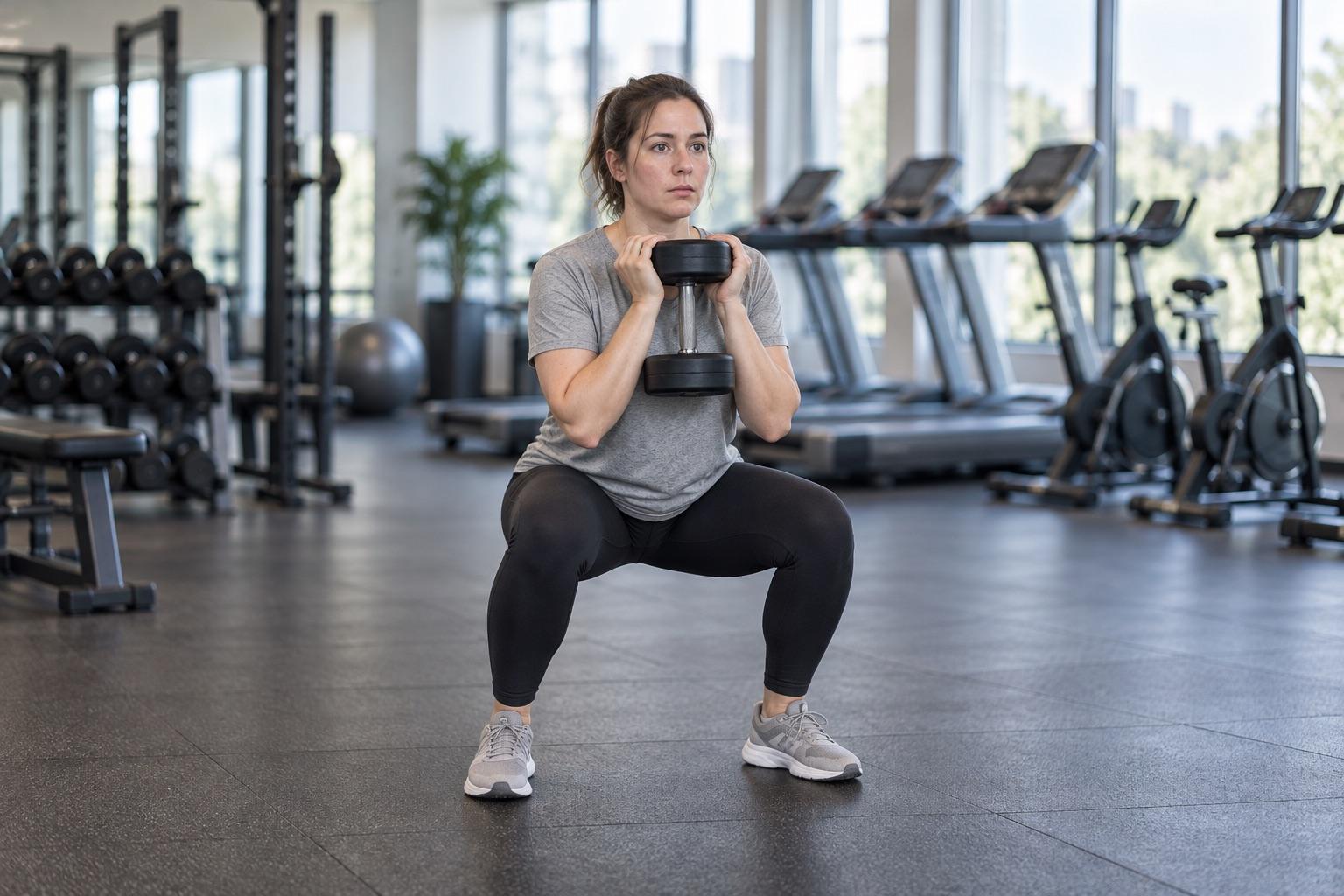
1. Your week: 3 lifting days and 2 cardio days
This weight loss workout plan for women is built for gym beginners: 3 full-body lifting days and 2 cardio days a week. Lifting keeps the muscle you have while you lose fat. Cardio burns extra calories. How fast the scale drops depends more on how much you eat than on your workouts.
Lift on Monday (Day 1), Wednesday (Day 2), and Friday (Day 3), and repeat the same week every week. All 3 are full-body workouts that train your legs, back, chest or shoulders, and core in one session, so missing a day never leaves a body part out for the week.
Leave a day between lifting days. If you can't set aside separate cardio days, do about 30 minutes right after your lifting workout instead.
2. Day 1 workout · Full body
Day 1 is all machines except the plank. Unlike free weights such as dumbbells, barbells, and kettlebells, machines don't make you balance the weight, so you can focus on the movement. Each lifting day is 5 exercises × 3 sets, about 40-45 minutes with rest.
To pick your first weight, try 12 reps. If you can't finish 10, use a lighter weight. If you finish 12 and could keep going to 15, use a weight one step heavier.
3. Day 2 workout · Full body
From Day 2, you start mixing free weights in with the machines. It trains the same areas as Day 1 with different exercises.
Free weights make you balance the weight yourself, so the muscles that keep you steady get trained along with the ones doing the lifting.
4. Day 3 workout · Full body
Day 3 is all free weights (dumbbells) except the bird dog.
5. Cardio days: what to do and how hard
Pick any one of the 4 options below and do it for 30 minutes. Choose the one you'd actually do again. Walking outside counts just as much as a machine at the gym, and so does walking more in your day.
For how hard to go, use the talk test: you should be able to talk in full sentences but not sing. If you can't say a full sentence, slow down. If you could sing along to music, speed up or raise the machine level by one.
If 30 minutes is too much at first, start with 15-20 minutes and add 5 minutes each week. Once 40 minutes feels comfortable, you can keep it there. The step mill (stair climber) is the hardest of the 4, so start at a slow speed.
6. How to add weight from week to week
Each session, compare with last time's weight and reps:
- You did 12 reps on all 3 sets with last time's weight? Go one step heavier next time. On a dumbbell exercise, that's the next dumbbell up. On a machine, move the pin down one plate. Expect fewer reps at first, around 10, and work back up to 12.
- You didn't reach 12 on every set? Keep the same weight and try to beat last time's reps.
- You got fewer reps than last time for 2 sessions in a row? Drop the weight one step and build back up.
On the Plank, add 5 seconds once you can hold 30 seconds on all 3 sets. The Dead Bug and Bird Dog use no weight, so once 8 reps on each side feel easy, go up to 10. If your weights or reps keep going up week after week, the plan is working (Progressive Overload Is the Only Variable That Actually Guarantees Muscle Growth.).
7. Training at home
If you can't get to the gym, swap each exercise for one below. It trains the same area, so keep the same sets and rest. The plank, dead bug, and bird dog need no equipment, so they stay as they are.
If knee push-ups are too hard, put your hands on a kitchen counter or a sturdy table. The higher your hands, the easier it gets. For a full plan built on dumbbells only, see the Dumbbell Workout Plan: 4-Day Intermediate Split.
8. Fitting the plan to your week
3 lifting days and 2 cardio days is the starting point. If you can train on fewer or more days than that, adjust it like this. When you're short on days, put lifting before cardio.
Frequently asked questions
Is cardio or weight training better for weight loss?
You need both. People who only did cardio lost more fat than people who only lifted, but only people who lifted gained muscle. Those who did both lost fat and gained muscle (Willis et al., 2012). So doing both together helps you lose weight: cardio for the extra calories, lifting to hold on to muscle.
Will lifting weights make me bulky?
No. Building a lot of muscle takes years of training heavy and eating more than you burn. When you're eating less to lose weight, lifting mostly helps you keep the muscle you already have.
Can I lose belly fat with this plan?
You'll lose fat from your belly, but you can't decide which area loses fat first. Ab exercises make your core stronger, but they don't burn the fat on top of it (Spot reduction is (mostly) a myth — but one 2023 RCT found a small trunk-fat edge).
Why isn't the scale moving even though I'm training?
Your weight goes up and down from day to day with water and food, so one weigh-in tells you little. Weigh yourself at the same time of day, look at the trend over a few weeks, and also measure your waist (Is body recomposition real? You can lose fat and build muscle at once — here's what drives it). If nothing has changed after 4-6 weeks, what you eat is the next thing to look at.
How is this different from a regular beginner plan?
This plan adds 2 cardio days and trains your whole body every lifting day. If your main goal is to get stronger rather than lose weight, the Beginner Workout Plan for Women: 3-Day Gym Split splits the week into push, pull, and leg days instead.
Get a weight loss plan built around your week
The plan above is a general starting point. Planfit recommends a workout plan based on your goal, experience level, and how many days a week you can train. You can also get workouts using only the equipment you have, or bodyweight only at home.
References
- Willis LH, Slentz CA, Bateman LA, et al. (2012). Effects of aerobic and/or resistance training on body mass and fat mass in overweight or obese adults.. J Appl Physiol. 10.1152/japplphysiol.01370.2011